
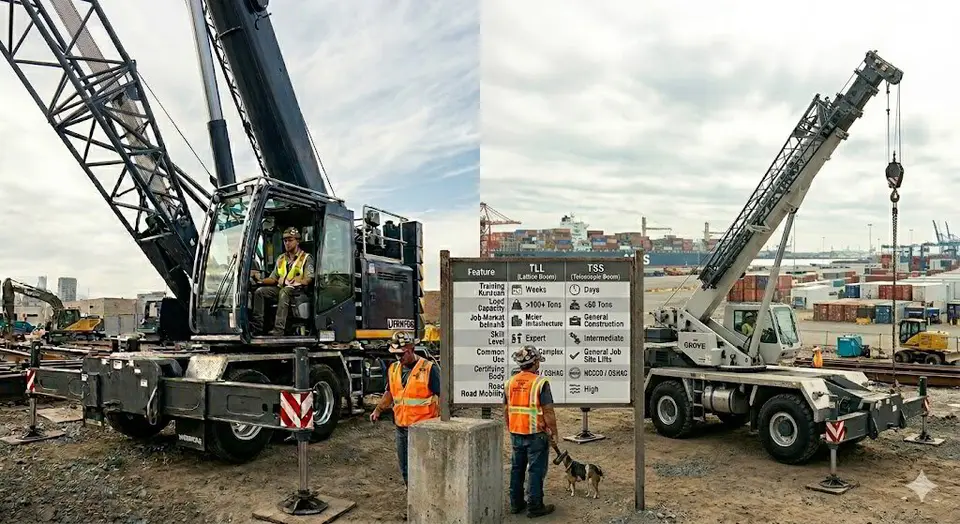
A quick refresher on the designations
NCCCO splits mobile crane certification into a Core written exam plus specialty exams. The two telescopic boom specialties are:
- TLL: telescopic boom, swing cab. The operator's cab rotates with the upper, as on most rough-terrain and all-terrain hydraulic cranes.
- TSS: telescopic boom, fixed cab. The operator works from a cab or station that stays put while the boom swings, typical of boom trucks.
Each designation also has its own hands-on practical exam on matching equipment. For a deeper look at exam content, see our post on preparing for the TSS/TLL exam. This article is about choosing how to train.
The three building blocks of any training plan
Whatever your background, preparation draws on three ingredients:
- Knowledge: load charts, setup, OSHA and ASME rules, signals and rigging basics. This is what the written exams test.
- Seat time: real hours at the controls of the type of crane you will test on.
- Exam rehearsal: timed written practice and a dry run of the practical course.
Training formats differ mainly in how they deliver the first ingredient and whether they include the second.
Comparing the formats
| Format | Delivers knowledge | Includes seat time | Schedule | Typical extra costs |
|---|---|---|---|---|
| Self-paced online prep | Yes, at your pace | No | Anytime | Exam fees; arranging seat time |
| Live online class | Yes, at group pace | No | Fixed sessions | Exam fees; arranging seat time |
| In-person classroom | Yes | Sometimes | Fixed days | Travel, lodging, time off |
| Hands-on training school | Usually | Yes | Fixed, often multi-day | Higher tuition, travel |
| Employer apprenticeship or mentoring | Varies | Yes | Built into work | Usually none to the trainee |
Rather than asking which format is best, ask which combination covers all three building blocks for you.
Starting point 1: Brand-new to cranes
You need everything: knowledge, seat time and a lot of supervised practice. Online prep can give you the knowledge base, but it cannot teach you to feather controls or judge a swing. Look for a path that includes substantial hands-on time, such as an employer program, an apprenticeship or a hands-on school, and use online study to get ahead on load charts and regulations before you arrive. Our practical training explainer covers how new operators find seat time.
Starting point 2: Boom truck operator moving to swing cab
If you have run a fixed-cab unit for a while, the TSS side may feel natural, but TLL brings differences in setup, cab position, swing behavior and chart layout. You likely need targeted knowledge plus some seat time on a swing-cab crane. Self-paced online study is a strong fit for the knowledge gap, because you can skip familiar material and focus on what is new.
Starting point 3: Experienced operator, never certified
Plenty of skilled operators have years in the seat and no card. Your hands-on skill is probably fine; the written exam is the risk. Chart notes, deductions, OSHA clearance rules and inspection requirements trip up experienced people who have relied on habit. Self-paced or live online prep is usually the efficient choice here, followed by a refresher on the practical course layout. Our TSS/TLL online training course was designed with this candidate in mind.
Starting point 4: Renewing a TSS or TLL card
NCCCO certifications last five years. Renewing operators take a recertification written exam and must meet an experience requirement, or pass a practical exam if they cannot. A refresher course that focuses on changes and commonly forgotten topics is usually enough. Our mobile crane recertification course is a live Zoom class built for exactly this.
Questions that sort the options quickly
- How much seat time do I already have on this crane type? Little or none means a hands-on component is essential.
- How strong is my chart reading? Weak means invest in knowledge training first.
- Can I leave work for several days? If not, favor online study and arrange seat time locally.
- Does my employer have equipment and a qualified mentor? That can solve the seat time problem cheaply.
What to check in any TSS/TLL course
- Coverage of both the Core and the telescopic specialty topics
- Load chart practice on swing-cab and fixed-cab charts, including deductions
- Setup topics: outriggers, cribbing, level, counterweight and ground conditions
- Power line rules under OSHA 1926.1407–1411
- Practice questions with explanations, ideally plus timed CCO practice tests
- A clear statement that the practical exam is separate and taken with an accredited examiner
How employers fit into the picture
Your employer has a stake in how you train. Under OSHA's crane rules, the employer must evaluate operators on the equipment they will use, even after certification, and must provide additional training when you move to unfamiliar equipment. That makes employers natural partners: some will provide seat time on a yard crane, pair you with a senior operator, or cover course and exam costs. Before you pay for a hands-on program, ask what your company already offers. You may find that the only missing piece is the written-exam knowledge, which is exactly what self-paced online study handles best.
Arranging the practical
Book your practical at an accredited site that has the crane type you need. Our practical test site finder helps you locate one. Try to practice on similar equipment beforehand, and walk through the practical test checklist so the course holds no surprises.
Bottom line
Online training is the most flexible way to master the written side of TSS and TLL certification. It works best combined with honest seat time on the right machine. Map your starting point, fill the gaps, and choose formats that cover all three building blocks.